

Reciprocity
On fish and radical presence.

A garland of green onion festoons steamed, ivory flesh, a verdant ribboning that contrasts the dark soy-based jus, tinging its belly a muted taupe. An eye glares up at me, a clouded sclera flattened to a coin. Its mouth hangs agape, expressing surprise, as if to say Oh! What a wonderful way you’ve dressed me.
On any other day, I would excuse myself from partaking in its consumption, but it is Tradition to eat at least a bite for Chinese New Year.
My stomach twists as a spoonful lands on my plate. Without mincing words, I am not the biggest fan of fish. It reminds me too much of the sea, of its aftertaste that lingers on pruned fingers and salted hair. A healthy serving of Lao Gan Ma helps the fish go down. I would not consider myself a picky eater, per se, but acknowledge my innate aversion to seafood and everything that comes in a shell. Mollusks and shellfish, to be exact — allergies that, perhaps, arose from an overconsumption of stuffed shrimp eggplant on family forays at our local dim sum restaurant. A restaurant long since shuttered, along with biweekly gatherings with my grandpa and cousins on Sunday evenings, washed in flickering golden hues from halogen lanterns lighting that narrow car park behind the kitchen, leading us to a table set with too much food. And too much shrimp, apparently.
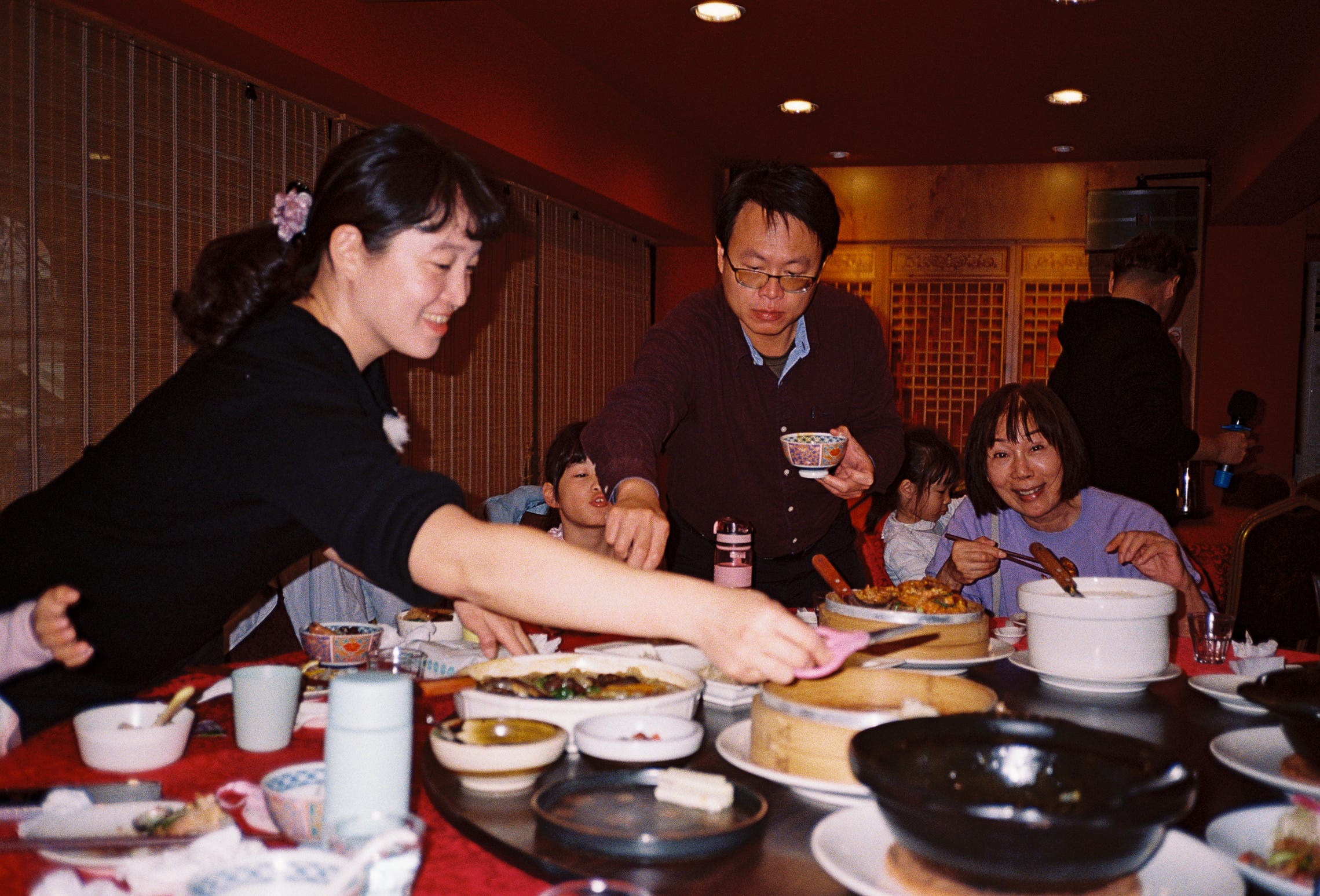
On this day, more of a symbolic gesture to cultural tradition than a cause of serious celebration, we gather as four — my parents and sister — to feast on an endless stream of homemade dishes, but we do not finish this fish. Tacitly understood, this need not be explained nor enforced. It sits, half-eaten, patiently waiting until our bellies are full and content and, as we clear the table, makes its exit, quietly packed away in tupperware. 年年有餘. Half saved so we have enough for tomorrow, that wealth and abundance would follow us into the next year. A superstition, or perhaps a prayer.
Having moved away from home, I find myself celebrating this time of year with friends. A diaspora of second generation transplants carve a sense of home through kitschy red decor and roughly wrapped dumplings we call “rustic.” There’s always plenty to eat at these potlucks (often a mixture of hardy Asian-adjacent dishes and a few incongruous, albeit well-meaning, Trader Joe’s snacks), but a whole fish is rare to come by.
In its absence, I reflect on this tradition, a ritual that signals a broader culture of prudence, transmitted through a the practice of a shared meal. In our abstinence from consuming every last bit of fish, we reframe the meaning of a meal. That this fish, one in an indistinguishable sea of others, is precious to us. We save it for ourselves, yes, so we can feed our families, but we can also project hope into the future. That we will have the provision of half a fish in the fridge. That when we are hungry, we will be fed.
And it causes me to understand our dependence on the earth: how she sustains us, how we must have reverence for her gifts. For they are gifts we did not produce, gifts we take for granted. The fish did not ask to be here. And yet here it is on my table, giving itself to people it never knew.
I think about the fisherman, who has a family of his own, and the fishmonger, who is likely as sick as me of eating fish. I think about the long, unglamorous chain of hands that delivered this fish to my table, of how many people’s livelihoods are contained within it. So, in gratitude, we must save half for tomorrow.
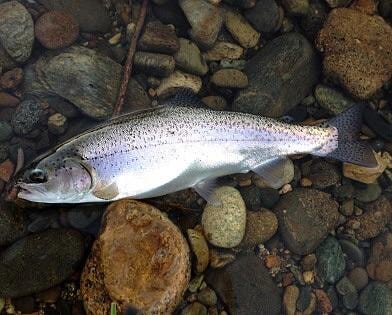
I feel as though, in our search for shinier things, seduced by the capitalist promise of endless growth, we confuse our greed for hunger and eat the whole fish ourselves.
The great lie of our current moment is that we have transcended dependency. That we are self-sufficient units of consumption, untethered from the earth, from each other, from anything we didn’t choose or pay for. Increasingly, we are divorced from our labor, told that our bodies, our minds, our creativity — that all fleshly things — are inefficient, that the next evolution is the artificially intelligent1.
But the fish is still dependent on the ocean, the ocean on the rain, the rain on the mountains and valleys that transpire and conspire to sustain life, that feeds us and returns itself back into oceans again. And how you and I were once attached to our mothers’ womb, to the first person who taught us that a meal was something shared.
And in that presence, we find love.